
LOGISTICS
Standardize processes and gain more control over your logistics operation
Centralize cargo, fleets, teams, and information to reduce losses, control costs, and increase operational efficiency.
More than 2,300 companies already use Checklist Fácil




















Gain more control across your entire logistics operation
Standardize processes, monitor fleets and teams, and reduce losses with centralized data and traceability at every stage.
STANDARDIZATION AND EFFICIENCY
Organize and standardize your entire logistics operation
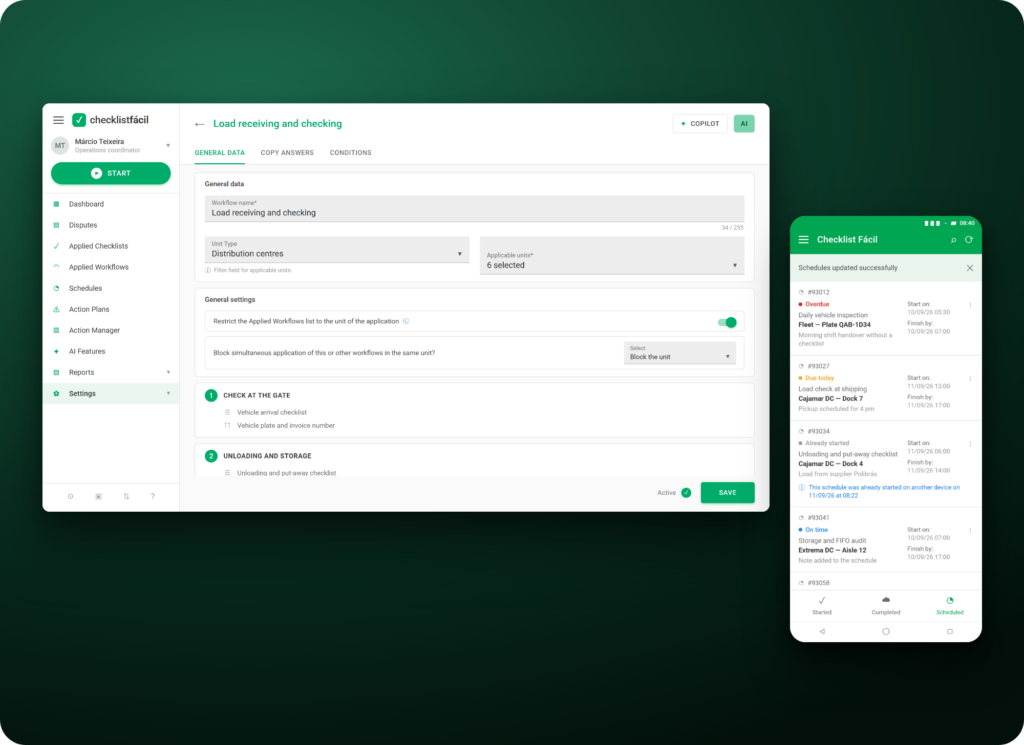
- Create Smart Checklists tailored to receiving, storage, shipping, and transport routines
- Structure workflows to connect different areas and ensure each stage is carried out correctly
- Assign owners and automate the routing of activities between teams
- Identify bottlenecks and improvement opportunities with centralized operational data
- Generate reports and indicators to support faster, more strategic decisions
FLEET CONTROL AND MAINTENANCE
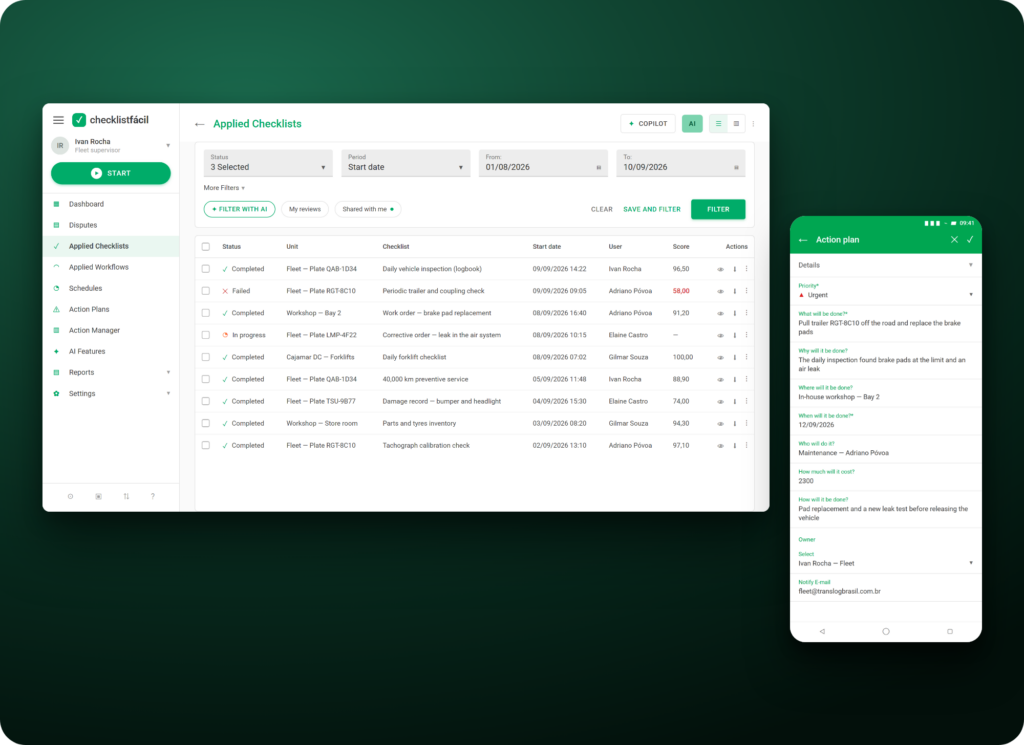
Keep vehicles safe and available for your operation
- Create checklists for daily inspections and periodic vehicle evaluations
- Identify damage and maintenance needs before they cause bigger breakdowns
- Organize work orders and track interventions performed on the fleet
- Log photos and other evidence to make maintenance team analysis easier
- Digitize logbooks to increase traceability and reduce operational failures
QUALITY AND TRACEABILITY
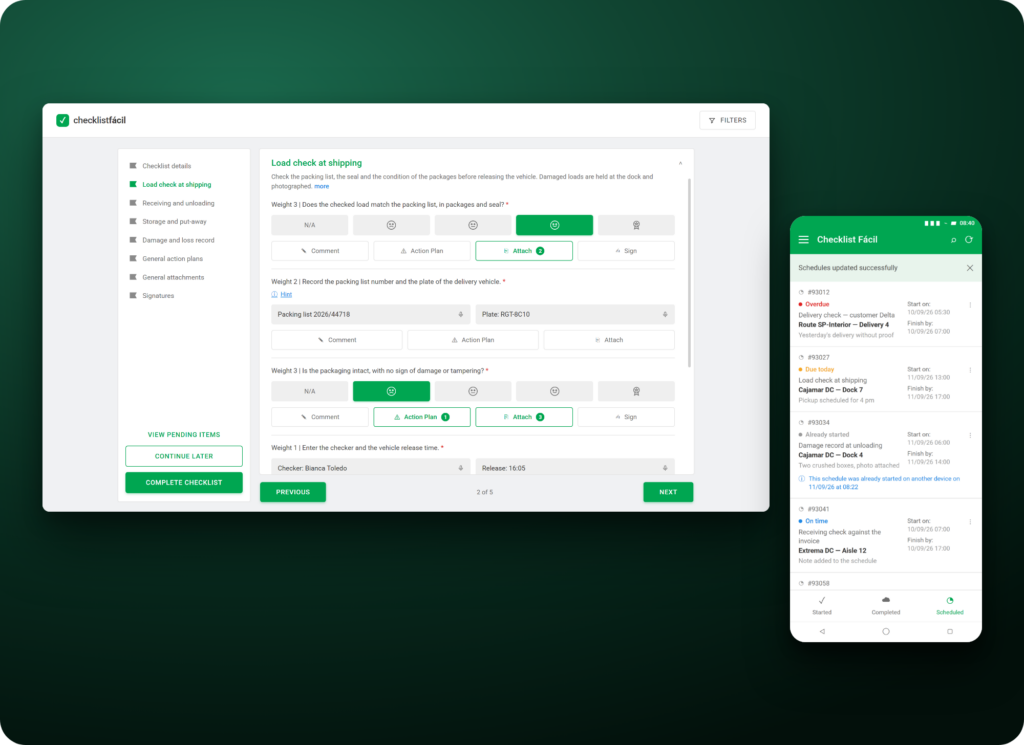
Reduce losses and improve delivery quality
- Log receiving and shipping with custom checklists and mandatory actions
- Centralize history to track all cargo movement
- Log damage, lost items, and other deviations with photos, videos, and files
- Track deadlines and receive notifications to reduce delivery delays
- Monitor results in real time to identify failures and implement corrections quickly
THIRD-PARTY AND DOCUMENT CONTROL
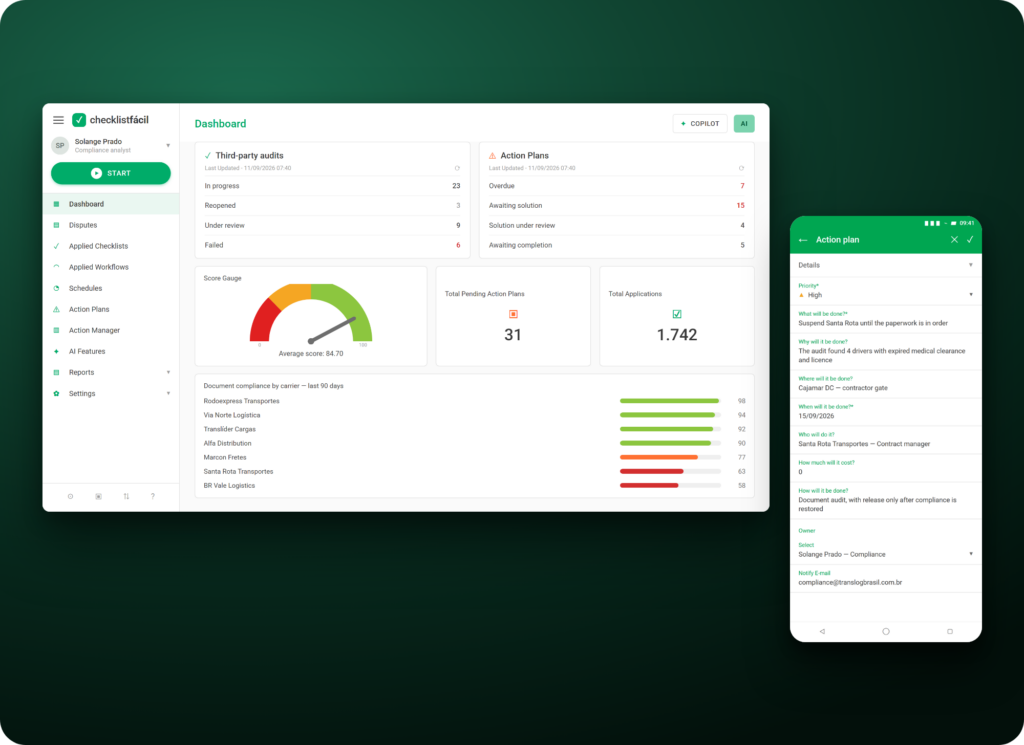
Ensure compliance in outsourced services and teams
- Inspect documents from drivers, suppliers, and service providers
- Standardize criteria to verify the regulatory compliance of outsourced operations
- Centralize evidence and documents to make lookups and audits easier
- Assign owners for each stage and track pending items through to resolution
- Conduct audits to ensure processes and services meet defined standards
Overcome the main challenges of Logistics Management
Centralize processes, reduce losses, and gain more control over cargo, fleets, teams, and deliveries.
Cargo losses and damage
Keep complete movement history to identify deviations and increase traceability.
Uncontrolled routes and teams
Organize activities and track teams to increase productivity and reduce operational costs.
Failures in receiving and shipping
Standardize inspections to ensure all necessary information is recorded correctly.
Missed deadlines
Schedule inspections and receive notifications to track planned and completed dates.
Inconsistent operational records
Digitize forms and eliminate problems with paper, illegible entries, and non-standardized information.
Lack of control over third parties
Inspect driver and supplier documents to track service compliance.
High maintenance costs
Conduct preventive inspections and identify repair needs before they cause bigger breakdowns.
Operational safety risks
Digitize logbooks and quickly log failures to increase driver safety.
START NOW
Turn processes into results starting today
Join over 2,300 companies using AI-powered Operational Intelligence to drive more strategic results
Chosen by more than 2,300 companies
Companies across different industries trust Checklist Fácil to standardize processes, boost productivity, and improve operational control.

“We have plans to expand the company, and that will bring increased use of Checklist Fácil. The administrative areas have discovered different ways to use it — there’s always an opportunity to improve processes.”

FAQ
Questions and Answers
Check out the most common questions about how Checklist Fácil helps control cargo, fleets, teams, and logistics processes.
How can Checklist Fácil be used in Logistics Management?
Checklist Fácil lets you digitize inspections, standardize processes, and track receiving, storage, shipping, transport, and fleet management activities in one place.
Can Checklist Fácil be used for vehicle inspections?
Yes. You can create custom checklists for daily and periodic inspections, log damage with photos, and track preventive and corrective maintenance needs.
How does Checklist Fácil help reduce cargo losses and damage?
The software keeps a history of records and lets you document every stage of cargo movement, increasing traceability and making it easier to identify damage, lost items, and other deviations.
Can deadlines and deliveries be tracked?
Yes. Scheduling and Notifications features help control planned dates, inspections, and activities, making it easier to track operational deadlines.
Does Checklist Fácil help manage drivers and outsourced suppliers?
Yes. The software lets you create inspections to verify documents from drivers, suppliers, and service providers, as well as centralize the records needed to track operational compliance.