
Connect
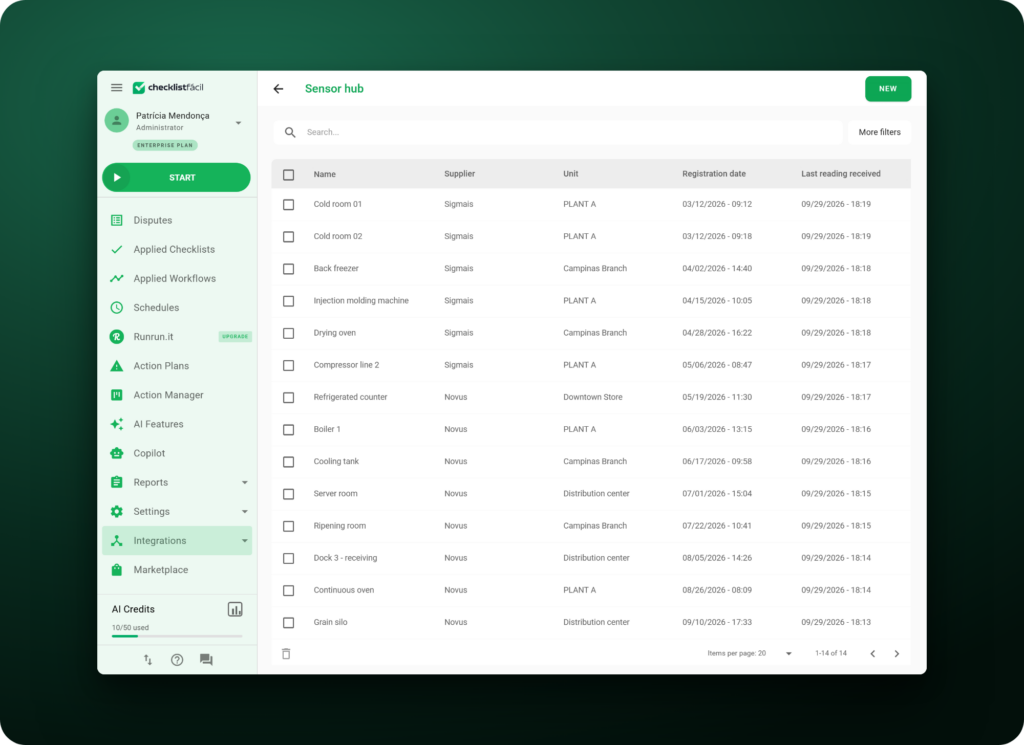
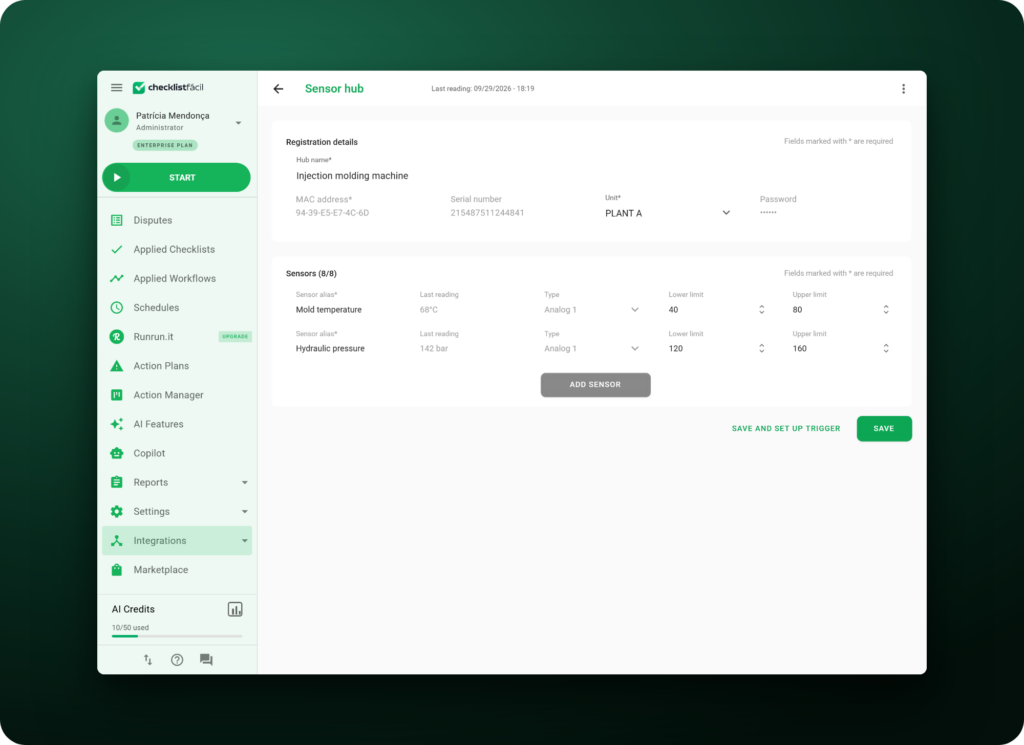
Register the devices and sensors used in your operation.
IoT Sensors
Integrate Checklist Fácil with IoT sensors to automatically collect data, identify deviations, and act faster in your operation.
BENEFITS
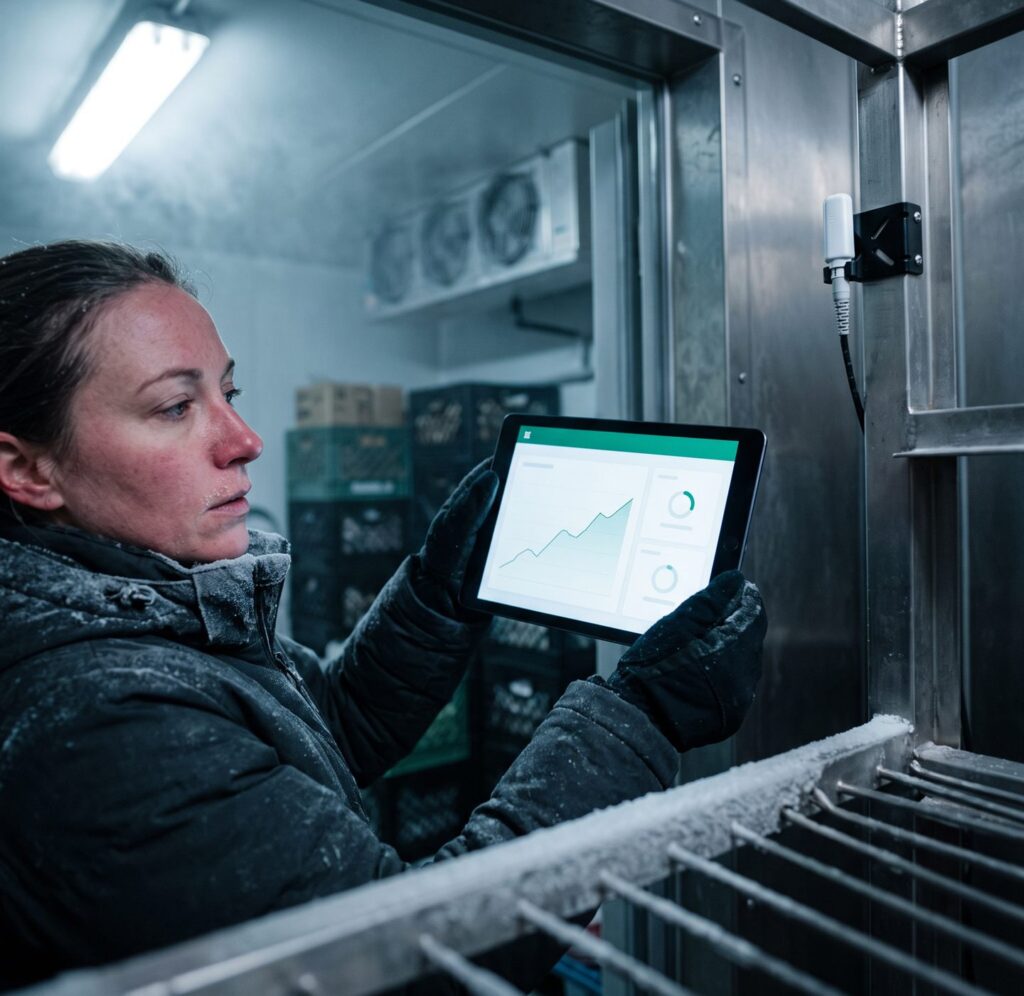
Continuously monitor information, set up automatic triggers, and use sensor data to prevent failures, reduce losses, and improve decision-making.
MONITORING
Continuously collect sensor information and track key indicators without relying on manual checks. Respond faster to changes and situations that need attention.
AUTOMATION
Set conditions so certain readings automatically trigger actions. Checklist Fácil can send notifications, create Action Plans, or schedule checklists when a trigger is activated.
PREVENTION
Use sensor data to quickly spot deviations and support preventive actions. This makes it easier to track assets and supports predictive maintenance strategies.
DATA
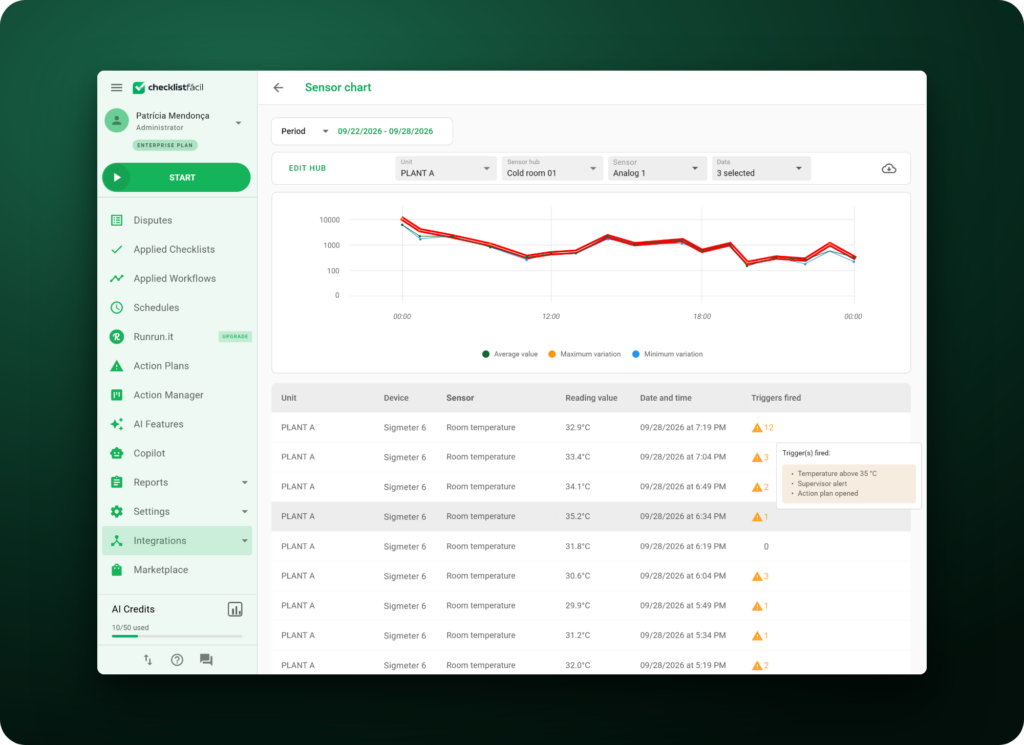
Reduce manual entries and use measurements collected directly from devices to track your operation. Review history and charts to analyze data behavior over time.
Connect devices, set conditions, and automate actions based on collected data.
Register the devices and sensors used in your operation.
Define the information to be monitored and set the conditions for each trigger.
Track the readings sent by the sensors and review the history of collected data.
Create notifications, Action Plans, or checklist schedules when configured conditions are met.
FEATURES
Use data collected by sensors to automate checks, identify deviations, and track results.
Track information collected by devices throughout your operation.
Automatically create Action Plans when a configured condition is met.
Notify teams when sensors identify situations that need attention.
Get up-to-date data to guide actions and reduce response time.
Reduce manual interference in collecting your operation’s information.
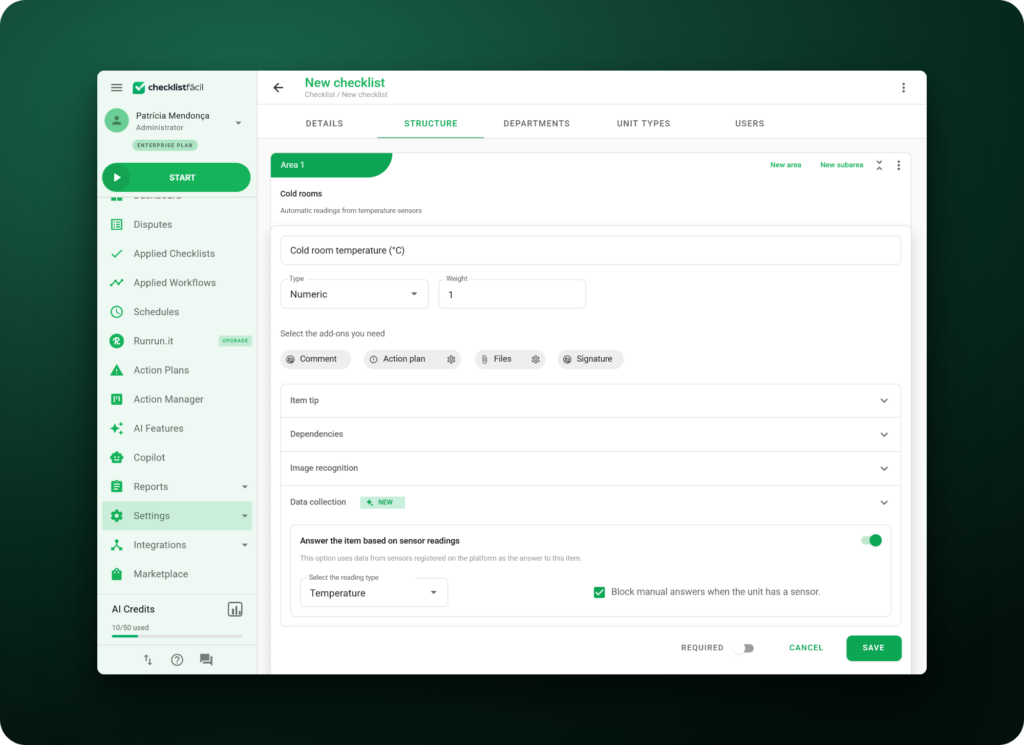
Use data from sensors to answer items and support checklist inspections.
Review sensor reading behavior across different time periods.
Track past records to identify patterns and support analysis.
APPLICATIONS
Automate the monitoring of equipment, environments, and assets according to each operation’s needs.
Monitor environment temperature and humidity to support food safety control and reduce losses.
Track refrigeration, climate control, and preservation equipment to identify failures more quickly.
Monitor machines and equipment to support predictive maintenance, extend asset lifespan, and reduce downtime.
Use telemetry data to track fleets, component wear, and conditions important for transportation.
Integrate sensors with other processes that depend on continuous measurements and fast responses to environmental changes.






















We have plans to expand the company, and this will lead to increased use of Checklist Fácil. Administrative departments have been discovering different ways to use it; there is always an opportunity to improve processes.

With Checklist Fácil, we have the peace of mind of knowing we won’t lose products in the cold storage room. We can leave on Friday and relax at home over the weekend because, if anything happens, the system will notify us. Everything changes when you encounter technology like this—technology that brings security to our processes, our company, and our equipment.

Decentralized processes and systems made information management for improvement actions quite difficult. Today, we are able to integrate all information from the controls of our Quality Management System, Environmental Management System, and Occupational Health and Safety System.
START NOW
Join over 2,300 companies using AI-powered Operational Intelligence to drive more strategic results
FAQ
They are devices that collect and communicate information about the environment or equipment, making it possible to automate data monitoring.
The integration supports different types of information, depending on the sensor used. Examples include temperature, humidity, pressure, level, flow, speed, and counter or odometer data.
Yes. You can set up triggers to send notifications when certain conditions are met.
Yes. Among the actions available for triggers is the automatic creation of Action Plans.
Yes. A trigger can create a checklist schedule and assign it to a responsible user.
Yes. Certain item types can use the most recent reading received from the sensor during the checklist inspection.
Yes. This feature lets you view charts and a list of recorded values along with when each reading was taken.
